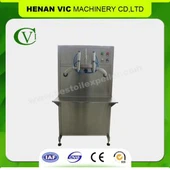
The most visible shift in 2026 is the move from manual or semi-automatic lines to fully digitized plants. Modern oil processing equipment ships with PLC and SCADA control that links temperature, pressure, and flow across every section into a closed-loop, self-balancing production flow - the operator sets a target, and the line adjusts itself. New presses add AI-driven feed control: sensors detect seed density and moisture in real time, and the screw automatically slows or speeds up to keep pressing pressure in the optimal window. By the end of the decade, a large share of new oil facilities are expected to run with AI-assisted decision support, cutting process variability and reducing operator dependence. For a plant manager, this means more consistent oil quality and fewer batches that drift out of spec on a night shift.
Energy Recovery And Low-Carbon Operation
Energy is one of the largest operating costs in an oil plant, and 2026 equipment is designed around recovering heat that older lines simply threw away. Multi-stage heat recovery networks use counter-flow heat exchangers to transfer heat from hot outgoing oil to cold incoming oil, reducing steam and utility consumption by 10–15%. Press barrels now capture waste heat and use it to pre-heat seeds before pressing. On the refining side, some plants are pairing deodorization with solar-thermal arrays to supply process heat, and high-efficiency IE3/IE4 motors are becoming standard rather than optional. The result is a lower cost per ton of oil and a smaller carbon footprint - both of which matter as energy prices and environmental regulations tighten.
Smart Low-Temperature Pressing
Consumer demand for premium, minimally processed oils is pushing equipment makers beyond the traditional hot-press line. Smart low-temperature pressing uses precise physical temperature control combined with digital pressure compensation to keep the oil below the threshold where nutrients and flavor degrade, while still driving residual oil in the cake down to competitive levels. Dynamic pressure and multi-stage temperature control adapt to fluctuations in seed moisture and oil content that would cause a traditional fixed-ratio expeller to under-perform. This is not just for boutique oils - industrial mills are adopting the technology to produce cold-pressed grades that command a premium and can be certified as extra-virgin or cold-pressed for export markets.
Small-Scale And Modular Refining
Not every trend is about giant plants. A fast-growing segment in 2026 is compact, modular refining units that fit in a workshop of 10–20 square meters and allow small processors and specialty-oil startups to refine their own oil instead of selling crude. These units integrate degumming, neutralization, bleaching, and deodorization in a skid-mounted package, with automatic temperature and vacuum control. Advanced deodorization systems remove more than 99% of volatile compounds, and IoT sensors monitor oil viscosity and free fatty acid levels in real time, adjusting process parameters without manual intervention. For walnuts, avocados, sesame, and other high-value seeds, a small refinery turns a low-margin crude-oil seller into a branded finished-oil producer.
Predictive Maintenance And Remote Monitoring
Unplanned downtime is expensive in a continuous oil plant, and new equipment is built to prevent it rather than react to it. Vibration and temperature sensors on press bearings, gearboxes, and refinery pumps feed machine-learning algorithms that flag abnormal motor currents and frequencies before a part fails. Field data from plants using these systems show unplanned downtime reduced by 40% to over 80%, depending on how fully the system is implemented. Remote monitoring lets an engineer or the equipment supplier view line performance from anywhere, which is especially valuable for plants in remote areas or for multi-site operators who want one team to support several mills.

Traceability And Food Safety
Food safety and traceability are no longer optional - they are market access requirements. Modern lines log every batch automatically: seed source, processing temperatures, press pressure, refining parameters, and final quality readings are stored in a secure database that maps to HACCP and ISO 22000 requirements. Some premium-oil producers are adding blockchain records that follow the oil from seed intake to bottled product, with GPS, time, and operator IDs at each step. Real-time quality sensors track acidity, peroxide value, and free fatty acid percentage during extraction, which makes it possible to certify cold-pressed and extra-virgin claims with data rather than promises - a real advantage when selling into regulated or high-value markets.
By-Product Valorization
The oil is only part of the revenue. New processing lines are designed with the cake and other by-products in mind from the start, rather than treating them as waste. Improved pre-treatment - precise cleaning, de-shelling, and sorting - produces a cleaner cake that commands a higher price as animal feed or as a feedstock for protein extraction. Some mills are adding secondary processing for meal, hulls, and soapstock, turning what used to be a disposal cost into a second revenue stream. For specialty oils such as walnut or peanut, this full-chain approach - pre-treatment, pressing, refining, and by-product upgrading - is what makes a small or medium plant profitable against larger commodity-oil competitors.
Conclusion
The edible oil equipment market in 2026 is being shaped by four forces: digital control that makes lines self-adjusting, energy recovery that lowers cost per ton, low-temperature and small-scale refining that opens premium and specialty markets, and predictive maintenance plus traceability that protect uptime and food safety. The plants that benefit most are not necessarily the biggest - they are the ones that adopt the right mix of automation, heat recovery, and by-product utilization for their capacity and oil type. For both new investors and existing mills planning an upgrade, the question is no longer whether to digitize and save energy, but how quickly to do it before competitors do.