

Principles of the Deodorization Process
The deodorization process typically involves sparging high-temperature steam through oils and fats. Under conditions of high temperature (240–260°C) and high vacuum (2–5 mmHg), the boiling points of odor-causing substances-such as aldehydes, ketones, and free fatty acids-are significantly lowered. Consequently, these substances are carried away along with the steam, thereby achieving the objective of eliminating odors from the oils and fats.
I. The Impact of Deodorization on Unsaturated Fatty Acids
(I) The Importance of Unsaturated Fatty Acids
Unsaturated fatty acids constitute a critical nutritional component of oils and fats. Some are beneficial for cardiovascular health, while others participate in numerous physiological processes, such as the construction of cell membranes and the synthesis of hormones.
(II) Changes in Unsaturated Fatty Acids During Deodorization**
1. Risk of Oxidation Reactions
• In the high-temperature environment of the deodorization process, unsaturated fatty acids are susceptible to oxidation. Upon oxidation, unsaturated fatty acids form peroxides; the subsequent decomposition of these peroxides generates harmful substances-such as aldehydes and ketones-which not only diminish the nutritional value of the unsaturated fatty acids but may also pose risks to human health.
2. Isomerization Reactions
• High temperatures may also trigger isomerization reactions within unsaturated fatty acids. This phenomenon could potentially increase the risk of cardiovascular disease. However, when operating under well-controlled conditions, modern advanced deodorization processes can minimize the extent of such isomerization reactions.
II. Impact on Fat-Soluble Vitamins
(I) Functions of Fat-Soluble Vitamins
Vitamin E, present in oils and fats, acts as a powerful antioxidant; it protects cells from damage caused by free radicals and plays a role in areas such as the prevention of cardiovascular diseases and the delay of aging. Vitamin K, on the other hand, performs vital functions related to blood coagulation and bone health; it participates in the synthesis of clotting factors and facilitates the deposition of calcium within bones.
(II) Losses During the Deodorization Process
1. Loss of Vitamin E
• Under the influence of high temperatures and steam during the deodorization process, the loss of Vitamin E can range from 30% to 50%. This loss diminishes the antioxidant capacity of the oil, rendering it more susceptible to oxidation during storage and usage.
2. Loss of Vitamin K
• However, when subjected to prolonged exposure to high temperatures and steam, Vitamin K also undergoes a certain degree of loss. If process controls are inadequate, the loss of Vitamin K becomes even more pronounced.
III. Impact on Phytosterols
(I) Benefits of Phytosterols
Phytosterols possess a chemical structure similar to that of cholesterol; within the human intestinal tract, they compete with cholesterol for absorption sites. This competition reduces cholesterol absorption, thereby helping to lower blood cholesterol levels and providing a protective effect on cardiovascular health.
(II) Changes During the Deodorization Process
1. Minor Loss
• During the deodorization process, a minor loss of phytosterols occurs. Under optimized deodorization process conditions, this loss can be controlled within a range of approximately 10% to 20%.
2. Potential for Altered Properties
• Concurrently, the high-temperature environment may potentially alter the physical and chemical properties of the phytosterols. Should this occur, it would diminish their protective effects on cardiovascular health.
IV. Improvements in Modern Deodorization Processes and the Preservation of Nutritional Components
(I) Process Improvement Measures
1. Optimization of Temperature and Time Control
• Modern deodorization processes utilize advanced temperature sensors and automated control systems to minimize the duration of the oil's exposure to high-temperature environments, while simultaneously ensuring effective deodorization. For instance, certain continuous deodorization processes can reduce the residence time of the oil within the deodorization tower from the traditional several hours to a mere 30 to 90 minutes; this significantly mitigates the oxidation of unsaturated fatty acids and minimizes the loss of nutritional components, such as vitamins.
2. Minimization of Oxygen Exposure
• Nitrogen blanketing systems are incorporated into the deodorization setup. Prior to the oil entering the deodorization equipment, the air within the apparatus is purged and replaced with nitrogen; furthermore, a small stream of nitrogen is continuously introduced throughout the deodorization process. This strategy effectively lowers the risk of oil oxidation at high temperatures, thereby safeguarding nutritional components such as unsaturated fatty acids.
3. Adoption of Novel Deodorization Media
• Research is currently underway to explore the use of novel deodorization media as alternatives to traditional steam. These new media hold the potential to exert a less detrimental impact on the oil's nutritional profile while remaining highly effective at eliminating odor-causing substances. For example, the use of supercritical carbon dioxide as a deodorization medium allows for excellent deodorization results to be achieved under relatively mild conditions, resulting in minimal degradation of the oil's nutritional components.
(II) Effectiveness in Preserving Nutritional Components
1. Enhancing the Stability of Unsaturated Fatty Acids
• Through the aforementioned improvement measures, the oxidation and isomerization reactions of unsaturated fatty acids can be effectively controlled. For instance, under the optimized deodorization process, the generation of unsaturated fatty acid oxidation products can be reduced by 50% to 70%, while the formation of *trans* fatty acids can also be kept at a low level, thereby better preserving the nutritional value of unsaturated fatty acids.
2. Minimizing the Loss of Fat-Soluble Vitamins
• Regarding fat-soluble vitamins, the improved deodorization process helps reduce the loss of Vitamin E and Vitamin K. For example, by adopting advanced continuous deodorization processes combined with nutritional preservation measures, Vitamin E loss can be reduced to between 10% and 20%, and Vitamin K loss can be controlled to approximately 5% to 10%. This ensures a better retention of the oil's antioxidant properties and other physiological functions.
3. Preserving the Functionality of Phytosterols
• Under the protection of modern deodorization processes, the loss of phytosterols can be further minimized, and their physical and chemical properties are better preserved. This facilitates the ability of phytosterols to exert their cholesterol-absorption-lowering function within the human intestinal tract, thereby maintaining their protective role in cardiovascular health.
The deodorization process does have a certain impact on the nutritional components of oils and fats-primarily involving the oxidation and isomerization of unsaturated fatty acids, the loss of fat-soluble vitamins, and minor losses of phytosterols. However, with the continuous advancement of modern deodorization technologies-through measures such as optimizing temperature and time controls, minimizing oxygen exposure, and utilizing novel deodorization media-it is now possible to maximize the preservation of the oil's nutritional components while simultaneously ensuring effective deodorization results.
V. Deodorization Equipment
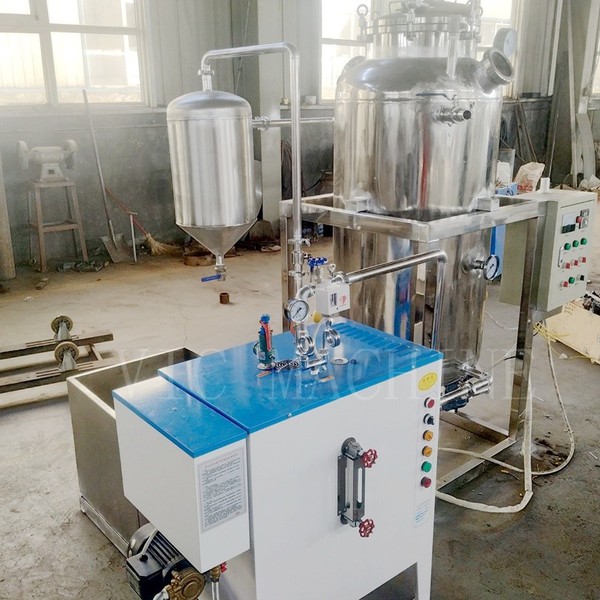
1. Small-Scale Standalone Deodorization pot
Designed for small-scale oil workshops and mills; characterized by low investment costs and simple operation, these units can be utilized independently.
2. Medium-Scale Deodorization Machine
Suitable for medium-sized oil mills and oil processing facilities, with a processing capacity ranging from 500 kg to 5 tons per day (500kg–5 TPD); features a high degree of system integration.

3. Large-Scale Production Line Deodorization Towers
Designed to be integrated with other refining equipment; suitable for use in large-scale oil processing plants.

Our Vic Machinery are able to supply all of the aforementioned deodorization and oil processing equipment. Welcome to inquiries and purchas


