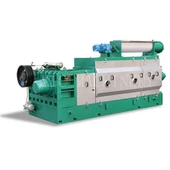
Selecting a proper oil expeller machine determines your oil yield, product quality and long-term profit. Learn machine types, capacity, material standards and key buying tips for small workshops and industrial-scale oil mills.
Setting up an oil-processing business requires heavy consideration of core equipment. An oil expeller machine is the central asset that affects production efficiency, oil purity, operating costs and your overall profit margin. Many startup owners end up with under-matched machines: low oil output, frequent breakdowns or incompatibility with local oilseeds after blind purchases. Whether you run a small rural workshop, medium-sized cooperative factory or large-scale commercial oil mill, you need to pick expellers based on your actual production scale, raw-material types and market positioning. This guide breaks down every essential factor so you can make a cost-effective decision.
Confirm Your Production Scale & Hourly Throughput
Production capacity is your first screening standard. Manufacturers usually mark throughput by kilograms per hour (kg/h). You should distinguish three business modes clearly:
Small-scale cottage business (5–30 kg/h): Compact screw-type expellers fit local retail, farm-fresh edible-oil sales with limited daily orders.
Medium-size oil mill (50-250 kg/h): Semi-automatic screw expellers with auto-feeding systems support daily continuous production for regional wholesale.
Large-industrial plant (300 kg/h-1.5 t/h): Heavy-duty industrial expellers matched with pre-roasting and filtering assemblies for round-the-clock running.
Do not trust exaggerated nominal parameters. Test actual working output under your local oil-seed moisture condition before purchase. High-capacity machines bring extra power bills; oversized models will waste electricity when you only process small batches.
Select Machine Type: Screw Expeller vs Hydraulic Expeller
Screw-type Oil Expeller (Most Popular for Commercial Use)
Rotating spiral shafts squeeze oilseeds continuously. Pros:
Realize non-stop 24-hour production;
Adapt to peanuts, sunflower seeds, rapeseed, soybean and most common oil-seeds;
Lower investment and maintenance cost; oil-cake by-products can be sold for animal feed. Cons: Heat generates during squeezing; temperature rises to 75-110℃, which may damage natural nutrients if without cooling parts. Best fit: Mass-produced hot-pressed cooking oil and medium-large-volume orders.
Hydraulic Oil Expeller
It extracts oil by static hydraulic pressure in batch-working mode. Pros: Low-temperature cold-press environment keeps vitamins and natural flavor; oil quality meets organic-grade standards for high-end markets. Cons: Batch-style operation limits processing speed, unsuitable for mass-volume production; initial price and later maintenance cost are higher. Best fit: Walnut, sesame, olive and premium-value-added cold-pressed oil products.
Choose Cold-press or Hot-press Mode
Hot-press: Pre-fry seeds before squeezing to improve oil yield, widely accepted for daily cooking oil.
Cold-press: Skip seed-frying steps; oil looks clear and retains nutrition, targeting health-conscious customers. Dual-purpose expellers supporting both cold-press and hot-press are popular for modern flexible-operation oil mills.

Check Raw-Material Compatibility
Different oil-seeds require different screw compression ratios and internal structures.
High-oil-content seeds (sesame, peanut): Standard-pitch screw expellers can achieve 92%-95% oil-extraction rate.
Hard-shell materials (copra, palm kernel): You need heavy-duty expellers with high-power motors to break thick shells.
Low-oil-content crops (soybean): Pre-crushing equipment is required before pressing to lift final yield.
If you plan to process multiple types of oil-seeds, choose expellers with adjustable-pitch screws rather than fixed-structure machines, so you can reset compression according to different raw-materials.
Evaluate Build-up Quality and Food-Grade Materials
Material quality directly decides machine service life and food safety:
All parts touching oil and seeds should adopt 304 or 316L stainless-steel. Carbon-steel components will rust gradually, cause metal residue inside oil and shorten machine lifespan.
Screw shaft is the core wearing part. Titanium-nitride-coated screws can run over 10,000 working hours without heavy wear, which saves your long-term replacement costs.
For export-oriented business, confirm that your expeller complies with EHEDG, FDA or local food-safety certifications. Otherwise you cannot sell your oil on overseas markets.
Practical Functional Features Worth Considering
Temperature-control system
Digital temperature-display and cooling jackets are essential if you sell cold-pressed oil, to avoid excessive heating from friction.
Automatic feeding and filtering system
Auto-feeding hoppers stabilize input volume and reduce manual work; built-in filters remove fine cake particles to save separate filtering steps.
Safety protection system
Overload protection, emergency-stop buttons and thermal cut-off can prevent motor burnout when hard foreign objects get inside the pressing chamber.
Easy-disassembly design
Quick-release structure helps you clean residual oil after daily production, preventing leftover oil from turning rancid and polluting later-batch oil.
Budget Planning & After-sales Service
You need to calculate total costs instead of only focusing on initial machine price:
Basic-price range: Small expellers $800-$3000; medium-size expellers $4000-$12000; full-set industrial production lines over $20,000.
Hidden costs: Freight, installation training, spare-part replacement and local voltage adaptation (380V/440V options for overseas areas). Never buy from suppliers with poor after-sales support. Reliable manufacturers provide overseas engineer guidance, spare-part supply and online troubleshooting services. Delayed maintenance will pause your whole production line and bring huge economic losses.
Conclusion
To select the ideal oil expeller machine for your business, follow this core logic: define daily output → confirm raw-material types → decide between cold-press or hot-press → check food-grade material and safety functions → compare after-sales terms. Avoid over-investing in oversized industrial machines if you are a new starter. Start with matched-capacity equipment and expand production later when market demand grows. A suitable expeller balances oil-yield performance, running cost and long-term return, which lays a solid foundation for your edible-oil business.