So you want to start a small edible oil business. Maybe you're planning a local brand of peanut oil, maybe you're thinking about sesame oil for the Asian market, or cold-pressed rapeseed oil for health-conscious customers. Whatever the direction, the production line you design will shape everything that follows - your costs, your quality, your ability to scale. The good news is you don't need a huge factory to get started. A well-designed small line can be profitable and expandable. But there's a lot more to it than buying a press and calling it a day. This guide covers the practical decisions you'll need to make, from choosing your raw materials to laying out the workshop.
Start With the Oil Type, Not the Machine
Here's a mistake a lot of beginners make: they pick a machine first and figure out the product later. That's backwards. The oil you want to produce determines everything else - which seeds you process, what process you use, and which machines you actually need.
Peanut oil, sesame oil, rapeseed oil, sunflower oil, soybean oil, olive oil - they all go through similar equipment, but the details differ. Sesame oil, for instance, usually involves roasting the seeds first for that deep, nutty flavor, which means you need a roaster. Peanut oil can be made hot-pressed or cold-pressed, and the choice changes your yields and your price point. Olive oil requires a completely different setup with a malaxer and specific extraction equipment.
So before you spend a single dollar, sit down and answer these questions: What oil are you making? Who's buying it? What quality level are you targeting? Are you selling wholesale or building a brand? The answers will tell you whether you need a simple cold-press setup or a fuller line with cleaning, roasting and refining stages.
The Core Process: What Happens Inside the Line
A small commercial edible oil line is really just a series of steps, each one preparing the raw material a little better for the next. Let's walk through the standard flow and the equipment behind each step.
It starts with cleaning. Raw seeds arrive with dust, stones, stems and sometimes metal fragments. Running them through a cleaning system - basically a combination of vibrating screens and magnets - keeps contaminants out of your oil and out of your machinery. It's cheap insurance, and skipping it is one of the fastest ways to wear out a press.
After cleaning comes shelling and crushing, depending on your material. Peanuts need shelling; sesame seeds need cleaning but not really shelling; rapeseed gets crushed to a coarse flake. The point is to break the material down so the oil can be released more easily in the next stage.
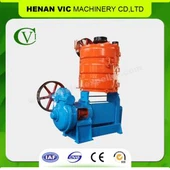
Then you have the two main processing routes, which we'll look at in more detail below: cold pressing or hot pressing. Both end at the same place - an oil press, usually a screw expeller for small operations - but the flavor, yield and quality of the oil are very different.
Whatever comes out of the press still has impurities: tiny solid particles, moisture, sometimes waxes. That's where filtration comes in. A plate-and-frame filter press or a simpler filter unit clears the oil until it's bright and stable. If you're producing higher-end oil, you might add a settling tank before filtration to let the heavier solids drop out naturally.
Cold Press or Hot Press? The Decision That Shapes Everything
This is probably the biggest fork in the road for a small producer, and the choice depends entirely on your market.
Cold pressing runs the seeds at low temperature, below roughly 60°C. The oil keeps more of its natural nutrients, antioxidants and flavor, and it carries that "cold-pressed" label that health-conscious buyers love. The catch is yield - cold pressing leaves more oil in the meal, so you get less oil per kilo of seed. It's also slower. But for premium products sold at a higher price, the math often works out in your favor.
Hot pressing is the traditional approach. The seeds get cooked or steamed before pressing, which makes the oil flow more easily. Yields go up, the oil has a richer, toastier flavor (essential for sesame oil), and the process is faster. The downside is that heat degrades some nutrients, and you'll need a cooker or roaster in the line. For commodity oils sold in bulk, hot pressing is usually the way to go.
Some small lines actually do both - a cooker that can be bypassed, so the same press can run hot or cold depending on the day's order. It's a flexible setup worth considering if your product range is likely to grow.

Laying Out the Workshop: Think About Flow
The equipment itself gets most of the attention, but the layout of your workshop is just as important. A bad layout means your workers are walking back and forth, your raw material is getting in the way, and your production capacity never quite lives up to the machine specs.
The golden rule is flow. Raw material should enter at one end, move through each process stage in a logical order, and exit at the other end as finished product. You want a straight line or an L-shape, not a maze. Each machine should feed the next one with minimal carrying in between. Conveyors help, but on a small line, a well-planned work surface and a few trolleys often do the job just as well.
Leave real space for storage. Raw seeds take up a lot of room, especially if you buy in bulk when prices are good. You also need space for the pressed meal - that's a saleable byproduct, not waste - and for finished oil in barrels or bottles. Don't forget the filter area, which gets messy, and a clean corner for bottling and labeling if you're packaging in-house.
Pay attention to power, water and drainage early. Oil presses are power-hungry, and the cleaning and filtering steps need water and proper drainage. Getting an electrician in at the design stage is much cheaper than rewiring a working workshop later.
Capacity, Budget and the Smart Way to Start
How big should your line be? The honest answer is: smaller than you think. A common mistake is buying a press that's oversized for the actual sales volume, which ties up capital and leaves a machine idle half the time.
Work backwards from your sales. If you're selling through local shops, restaurants and an online store, work out a realistic monthly volume. Add some headroom for growth, and then pick the equipment. A small press might do a few hundred kilos a day - that's already more than most startup brands sell in a week. Start there.
Budget-wise, it's worth spending more on the press itself and the filter, because those determine oil quality and yield. You can save on simpler things: second-hand cleaning equipment, manual bottling instead of an automatic filler, a painted steel frame instead of stainless where hygiene allows. Just don't cheap out on anything that touches the oil, and don't skip the cleaning stage to save money - you'll pay for it in maintenance and quality problems down the line.
Mistakes New Builders Make
Over the years, a few patterns show up again and again in small oil plants. Skimping on seed cleaning heads the list - it wrecks presses and contaminates oil. Buying one oversized machine instead of a balanced line is another: a huge press with a tiny filter creates a bottleneck you'll fight every day. Some people skip the settling and filtering stages entirely in the rush to sell, and then wonder why their oil clouds up or turns rancid in the bottle.
Water and moisture control is another quiet killer. Water that gets into the oil during processing causes it to spoil faster, and excess moisture in the seeds before pressing lowers both yield and quality. A moisture meter costs almost nothing and saves you from a lot of grief.
And a surprisingly common one: not planning for safety and maintenance space. Oil is slippery, equipment gets hot, and presses need regular cleaning and service. A cramped workshop makes all of that harder and riskier.
Conclusion
Designing a small commercial edible oil line isn't complicated, but it rewards people who think it through. Start with the oil type and the market you're selling to, build the process around that, lay out the workshop so the work flows, and size your equipment to realistic sales rather than dreams. Keep the quality-critical parts - the press, the filters, the cleaning stage - at the heart of your budget, and you'll end up with a line that makes good oil reliably and grows with your business.